Everything that goes into the ground — from the corpse to the coffin — must be biodegradable and free of chemicals.
ByAlex Fox
Story at a glance
- To reduce its carbon footprint, Paris has opened its first green cemetery.
- The new 17,000-square-foot section of the Ivry-sur-Seine cemetery has room for 150 green burial plots.
- In green burials, coffins are made of locally sourced wood or cardboard, and tombstones are replaced by wooden grave markers, which Paris will provide and renew every 10 years.
Death in Paris just got a bit more au naturale. The city recently opened a new 17,000-square-foot section of its Ivry-sur-Seine cemetery for 150 green burial plots, Citylab reports. The change is part of the city’s efforts to reduce its carbon footprint and go carbon-neutral by 2050.
With a traditional burial, the end of a human life doesn’t signal the end of their carbon emissions. On average, traditional burials generate almost 1 ton of carbon dioxide — equivalent to burning around 100 gallons of gasoline — while cremation reduces the total to 500 pounds, according to a 2017 study commissioned by the city of Paris,
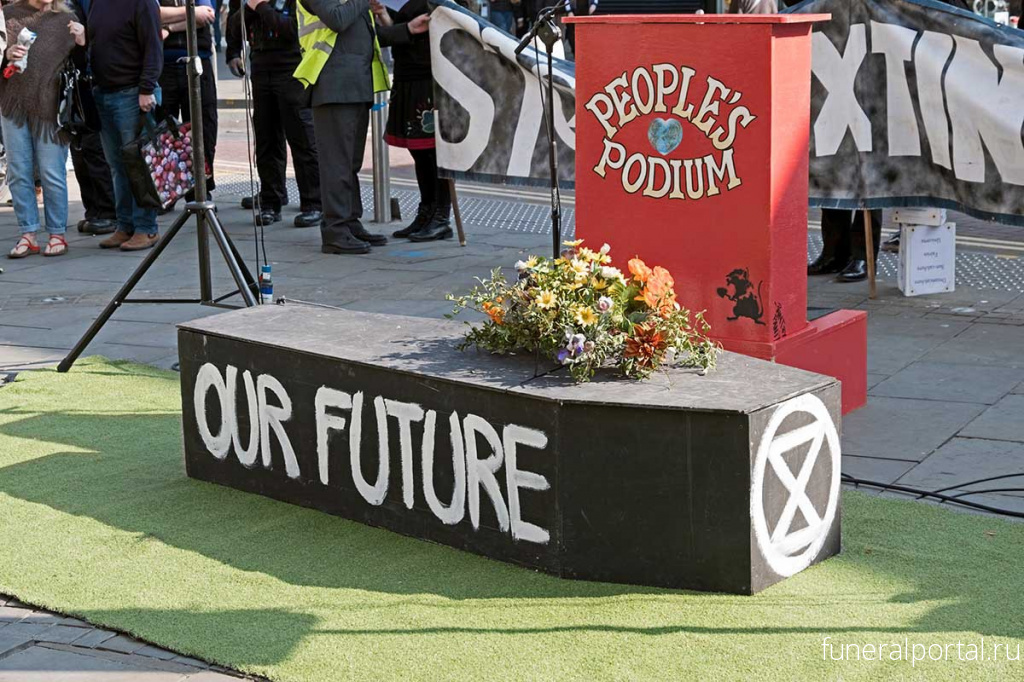
But what makes a cemetery green? Green-burial standards dictate that everything has to be biodegradable. So no concrete, no chemical embalming and, though it might sound weird, no burial clothing made of synthetic materials. This means coffins are made of locally sourced wood or cardboard, and tombstones will be replaced by wooden grave markers, which the city will provide and renew every 10 years.
In the U.S., green burial options are becoming increasingly available. Earlier this year, Washington state legalized a process often called “human composting,” and is one of 20 states that allow “liquid burial,” in which the body is dissolved in a solution.
The new green alternative in France appears to respond to the concerns of a growing number of Parisians. “A lot of people tell us the environment is important to them, and many go into fairly complex planning, even thinking about how their relatives and friends will use transportation to their funerals and how they can reduce their carbon footprint,” Camille Strozecki, founder of Paris funeral company Pompes Funèbres 1887, told Citylab.
The 10-year cost of a green burial plot will also be about 20 percent cheaper than a traditional one. In the future, Paris plans to open 2,000 additional green burial plots.

Paris opens first cemetery dedicated to green burials
https://www.treehugger.com/culture/paris-opens-first-cemetery-dedicated-green-burials.html