- By Jonathan Glancey
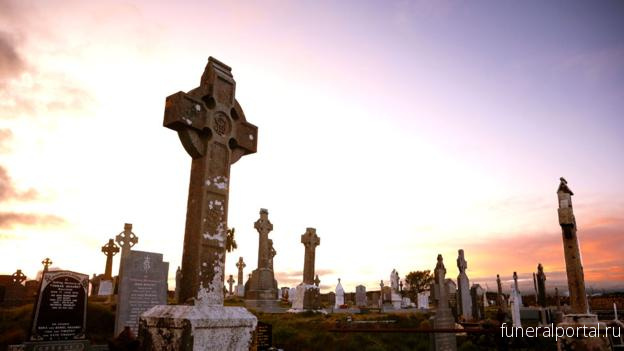
The word cemetery, derived from ancient Greek, means a sleeping place. So, those countless inscriptions found in city cemeteries reading Gone to Sleep or Rest in Peace make perfect sense. Here, bodies lie in rows beneath stone and marble monuments as if asleep in secret dormitories.
And – except for those susceptible to images from horror stories or George A Romero’s Night of the Living Dead – cemeteries, as different as San Michele, the Venetian island graveyard, and Calvary Cemetery, Queens, with its tombs of Italian mobsters overlooking Manhattan – are truly restful places offering a sense of reverie and otherworldly escape from the teeming towns and cities they serve.
The works of skilled landscape designers, architects, sculptors, letter carvers and gardeners, city cemeteries can be heartbreakingly beautiful. And, yet, although often havens for wildlife, compelling essays in the history of taste and design, and fascinating glimpses into social conventions and religious creeds, the genesis of cemeteries was a frightening one. Until the 19th Century, it was normal to bury the urban dead in churchyards. As the population of industrial cities in Europe skyrocketed, far too many corpses were shoe-horned into already crammed graveyards. These contaminated water supplies and horrific cholera epidemics ravaged cities.

Bone-aparte: Famous French leader Napoleon Bonaparte commissioned new landscaped cemeteries around Paris to tackle the city's overcrowded graveyards (Corbis)
Napoleon Bonaparte was one of the first western leaders to tackle this scourge of the dead. In 18th Century Paris, the growing problem had been resolved, in part, by interring skeletons in vast underground catacombs, but as these threatened the very stability of the city above them, new solutions were needed. Napoleon decreed landscaped cemeteries around the city. The first and foremost of these is Père Lachaise in the 20th arrondisement, opened in 1804 days after Bonaparte had been proclaimed Emperor.
After a slow start, it became fashionable to be buried here, especially after the Empress Josephine had the remains of the ill-starred 12th Century lovers Abelard and Heloise reburied at Père Lachaise. Today, the cemetery – complete with some 69,000 monuments and resembling a city in miniature – is so densely populated with corpses, a million, perhaps – that 30-year leases are issued; if these are not renewed, remains are disinterred and removed.
Visitors flock here to find the graves of Molière, Chopin, Victor Hugo, Colette, Marcel Proust, Edith Piaf, Isadora Duncan, Oscar Wilde, Gertrude Stein and Jim Morrison, the lead singer of The Doors.
‘Cult of death’
Père Lachaise inspired similar developments across the Channel. Seven magnificent cemeteries were ringed around London, beginning with Kensal Rise in 1832. The most haunting – in every sense – is Highgate, dating from 1839, planned by the architect and entrepreneur, Stephen Geary, founder of the London Cemetery Company. Death was big business in Victorian Britain. A prevailing cult of death demanded extravagant tombs in exotic styles. Although mocked by such critics as Augustus Welby Pugin, joint architect of the Palace of Westminster, who convinced many of his countryman that Gothic was the only proper style for a Christian country, Highgate boasted an overtly pagan Egyptian Avenue and Circle of Lebanon.

Morgue than words: London's Highgate Cemetery is home to many impressive burials, including the tomb of Karl Marx crowned with a sculptured head (Corbis)
Unlike churchyards, these London cemeteries were not strictly denominational. Dissenters – those outside the Church of England – could be buried here, too. Highgate is where you will find the tomb of Karl Marx crowned with a vast sculpted head of the prodigiously bearded philosopher and revolutionary socialist. Commissioned by the Communist Party of Great Britain, Lawrence Bradshaw’s sculpture was unveiled in 1956, the year the Soviet Union invaded Hungary and brutally suppressed an uprising against its authority.
The largest in Europe, the Grade I listed City of London Cemetery opened in 1854, stretching from the outer East End towards Epping Forest. Much of the land had been owned by the 2nd Duke of Wellington, a reminder of Napoleon’s role in the creation of the urban cemetery as well as his defeat at Waterloo.
Here, tombs of many different styles lead out to woods in one direction, electricity pylons in another: this is the land of the living and the dead. Among the dead are thousands of Londoners whose remains were removed here from a host of forgotten City of London churches demolished under the Union of Benefices Act of 1860 – All Hallows Bread Street, St Martin Outwich, St Alphage London Wall – or by German bombs during the Blitz.
‘Romantic landscapes’
Even bigger cemeteries were planned for London, including an enormous pyramid designed by the architect Thomas Wilson that was to have loomed over Primrose Hill, the highest point in the city, its 94 dark floors and the remains of up to five million Londoners reached by steam-powered lifts. It never happened. But, a vast cemetery was built at Brooklands, Surrey, 23 miles west of London reached by special trains from its own London terminus at Waterloo. Commuters on trains into Waterloo packed as tight as coffins might feel like the living dead, but until 1941, trains on parallel tracks carried real coffins and mourners separated according to class.

Breathtaking: Iraq's Wadi us-Salaam (the Valley of Peace) cemetery has been in use for at least 1,400 years (Getty)
The biggest cemetery of all, however, is both ancient and far from Europe. This is Wadi us-Salaam (the Valley of Peace), an immense city of the dead at Najaf, Iraq. In use for at least 1,400 years, its immensity – it must be all of 10km long – takes the breath away as surely as the heat that rises to 50C in summer. Internecine fighting has taken place between the owners of tombs in recent years, and yet rival Sunni and Shia Muslims continue to be united here in death.
One of the most delightful escapes from the torpid heat of Calcutta is the city’s South Park Cemetery founded in 1767 to house late employees of the East India Company. A lush place of tropical foliage and cawing crows, here are Neo-Gothic and Indo-Saracenic tombs, domes, ogee arches, obelisks and pyramids. Along with those of schoolteachers, surveyors and architects, is the tomb of Colonel Robert Kyd, founder of Calcutta’s Botanical Garden, and the last post of Major-General Charles ‘Hindoo’ Stuart, the Anglo-Irish officer who famously embraced Hindu culture. This exquisite 18th Century cemetery was founded, independently, decades before those enacted by parliament in Britain and France.

Dead quiet: Calcutta's South Park Cemetery, founded in 1767, is a delightful escape from the heat of the city (Corbis)
The art of designing city cemeteries, so rich in the 18th and 19th Centuries, has not been lost altogether since. The Woodland Cemetery, Stockholm (1915-40) by Swedish architects Gunnar Asplund and Sigurd Lewerentz, the Brionvega Cemetery near Treviso by Carlo Scarpa (this beautifully sculpted cemetery was completed with the death in 1968 of the Venetian architect who is buried here) and the mortuary chapel at Budapest’s Farkasreti Cemetery at the end of the city’s Number 59 tram line, designed by Imre Makovecz in the early 1980s, are highly symbolic, beautifully crafted and imaginative responses to the question of how and where we bury our cities’ dead.
These, too, are places where we can study unexpected architecture, revel in romantic landscapes, share open spaces with a wealth of flora and fauna, for whom cemeteries are sanctuaries, remember the dead, or simply lie between tombs of all shapes and styles, dozing off into comforting sleep.